Bulbs: Start at the Socket
Replacing a light bulb is mechanically simple, but smart bulbs house micro-controllers, radios, and power conversion circuits inside the base. Selecting the wrong fit leads to thermal throttling, flickering, and premature component death.
The Anatomy of Domestic Smart Bulbs
Unlike old incandescent filaments that radiated heat outward through glass, an LED bulb conducts thermal load backward into its ceramic or plastic heat sink. When packed into an airtight glass ceiling globe or recessed can, that heat accumulates, degrading the radio chipset and reducing the LED emitter life from 25,000 hours to fewer than 5,000 hours.
Always inspect the manufacturer’s datasheet for "enclosed fixture rating" before inserting smart bulbs into sealed porch lights or flush-mount hallway globes.
Understanding Base Formats
Domestic fittings generally resolve into three main base categories:
- Edison Screw (E26 / E27): The ubiquitous general-purpose socket found in reading lamps, pendants, and freestanding fixtures. E26 is standard in North America; E27 is standard across Europe and Australasia.
- Candelabra (E12 / E14): Compact tapered sockets designed for chandeliers, wall sconces, and smaller decorative shades. Internal space for radios is constrained, often leading to slightly higher operating temperatures.
- Bayonet (B22): Push-and-twist socket common in the UK and commonwealth nations.
- Twist-Lock Spotlights (GU10): 230V directional reflectors used in recessed ceilings and track lighting. Clearance depth is critical here; many smart GU10s measure 5–8mm longer than traditional halogen equivalents.
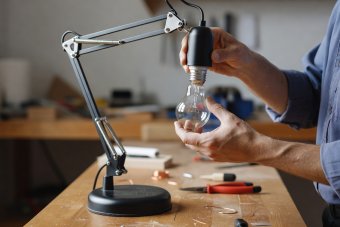
Clearance Warning: Length & Girth
Smart bulbs are frequently 10% to 15% larger in overall volume than classic A19 bulbs to house antenna arrays. Measure shade clips and harp heights before ordering multi-packs.
Color Temperature (CCT) vs. RGB Color
Consumers often purchase full RGB (color-changing) bulbs expecting a transformative experience, only to leave them locked on warm white 98% of the year. White-spectrum bulbs (Tunable White) cost substantially less, produce higher lumen outputs across crucial warm-to-cool reading ranges (2200K to 6500K), and deliver superior color rendering.
| Bulb Class | Typical Lumens | Wattage (Max) | Optimal Use Cases | Relative Cost |
|---|---|---|---|---|
| Fixed Warm White (2700K) | 800 lm (60W equiv.) | 7.5W - 9W | Bedside tables, hallway sconces, secondary lamps | Affordable ($8 - $12) |
| Tunable White (2200K - 6500K) | 800 - 1100 lm | 9W - 11W | Home offices, kitchens, multipurpose dining tables | Moderate ($15 - $25) |
| Full Color + White (RGBWW) | 800 - 1600 lm | 10W - 15W | Media entertainment areas, accent corners, mood wash | Premium ($35 - $55) |
| Filament Decorative (Smart) | 500 - 650 lm | 5W - 7W | Exposed glass lanterns, pendant clusters, vintage dining | Moderate ($20 - $30) |
The Color Rendering Metric: Why CRI Matters
Color Rendering Index (CRI) quantifies how daylight-true colors appear beneath artificial emitters. Low-end smart LEDs frequently ship with CRI ratings between 70 and 80, causing warm wood floors to appear greyish and fresh food to look pallid.
For primary domestic areas where you spend long hours—such as kitchen counters and living seating—insist on hardware specifying CRI 90 or higher with a high R9 value (saturated red rendering). High CRI lighting prevents the sterile institutional feeling often mistakenly blamed on LED technology.
LUMEN BENCHMARKS BY ROOM:
• Kitchen prep surfaces: 400 - 600 lux (approx. 2000-3000 total lumens)
• Living room lounge: 100 - 150 lux (approx. 1000-1500 total lumens across zones)
• Bedroom nighttime: 50 - 80 lux (approx. 400-800 lumens diffused)
• Home desk workspace: 300 - 500 lux on desktop plane