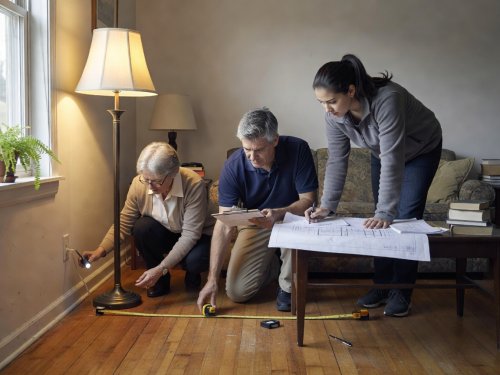
 07:00 – 12:00
Morning Activation
4000K to 5000K cool white at 80% to 100% brightness. Mimics morning sunlight; clears brain fog and aids visual acuity during morning routines.
Poorly conceived automations irritate family members faster than traditional switches ever could. When bathroom lights shut off mid-shower or hallway floodlights trigger at 3 AM because a pet walked past, technology becomes an obstacle. Here is how to engineer dependable routines.
Passive Infrared (PIR) sensors detect the movement of thermal heat signatures across fixed optical zones. They are fast (under 100ms response time), operate on coin-cell batteries for up to two years, and excel at transient passageways like entry halls and staircases. However, if you sit motionless at a desk or reading chair, a PIR sensor cannot see you and will trigger a shutoff command.
mmWave Presence Radars emit micro-frequency radar waves (typically 24GHz or 60GHz) that detect microscopic physical displacements, including the rise and fall of human lungs while breathing. They ensure lights remain illuminated while you occupy a room quietly. Due to high processor draw, mmWave units generally require continuous mains USB power rather than coin cells.
| Feature | PIR Motion | mmWave Radar |
|---|---|---|
| Detection Speed | Fast (< 150ms) | Moderate (~300-600ms) |
| Stillness Detection | Fails when still | Maintains true presence |
| Power Requirement | Coin cell (CR2450) | USB-C Mains Powered |
| Zone Masking | Manual tape blinders | Software grid exclusion |
| Optimal Placement | Hallways, Pantries | Offices, Bedrooms, Sofas |
Table 3.1: Sensor operational characteristics in residential environments.
Human biological clocks respond strongly to the color temperature of ambient illumination. Morning light rich in blue wavelengths (5000K–6500K) suppresses melatonin production and boosts focus, while warm evening tones (2000K–2700K) signal the pineal gland to prepare for restorative rest.
07:00 – 12:00
4000K to 5000K cool white at 80% to 100% brightness. Mimics morning sunlight; clears brain fog and aids visual acuity during morning routines.
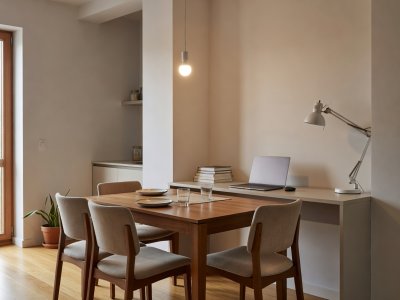 12:00 – 18:00
3500K neutral white at 70% brightness. Balances incoming window daylight without causing harsh interior contrasts or screen reflections.
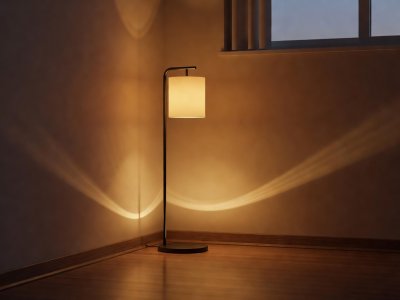 18:00 – 22:30
2400K to 2700K warm parchment at 40% brightness. Overhead ceiling luminaires shut down; perimeter floor fixtures and under-cabinet strips take over.
Every automated lighting system must accommodate edge cases: a sleeping guest on the sofa, a late-night work project, or a family movie night. Without intuitive manual overrides, family members will bypass your smart system entirely.
Implement battery-powered wireless scene switches configured with logical physical steps:
Between 23:00 and 06:00, sensors in hallways, staircases, and bathrooms should never activate main overhead lights. Instead, program them to illuminate low-level kickboard strips or wall sconces at 5% to 8% warm white. This preserves night vision and avoids sleep cycle disruption.
We use cookies We use necessary cookies to run the site and, with your consent, optional ones to measure visits. You can change this at any time. Read more